African Vibe
  • Home
  • Store
  • Contact
  • Information
  • Recipes
  • Useful links
  • Recent Posts
  • Reviews
  • more...
  • Log In
  • Cart (0)

Favourite South African Chocolate: The Sweet Taste of Home

14/6/2020

 
Picture
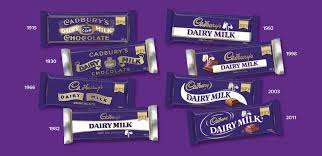
What are the top-rated chocolates in South Africa? Well, according to the Sunday Times Top Brands Awards over the last 4 years it is the Cadbury Dairy Milk chocolate bar. This mainstay of the candy store and sweets shop will be familiar to citizens of the member states of the Commonwealth. John Cadbury, began selling drinking chocolate in Birmingham in 1824, and his name is synonymous with British colonial expansion into its empire. In 1920, Cadbury opened a chocolate factory in Tasmania, Australia. In 1938, it began manufacturing chocolate products in Port Elizabeth, South Africa and continues to this day. Favourite South African chocolate: The sweet taste of home reminds many of their former roots in far flung places. 

I Visited the Cadbury Chocolate Factory

In fact, I visited the Cadbury chocolate factory as a youngster in short pants. In a stroke of rare good fortune my primary school travelled vast distances to the other side of the country and included a day outing to the home of delicious milk chocolate. In scenes reminiscent of Willy Wonka’s chocolate factory troops of 10-year olds made their way around this temple of sweet delight. Nobody fell in a vat of liquid chocolate and I did not see a single Oompa Loompa but it was a memorable excursion. My favourite South African chocolate: The sweet taste of home remains on my tongue to this very day. What we encounter in our formative years forges an indelible impression and chocolate is no exception.

South African Cadbury Lunch Bar = A Picnic

Cadbury’s Lunch Bar is a close second in the favourite South African chocolate stakes. In Australia, we call this a Picnic Bar. Containing peanuts, nougat, caramel, puffed rice, biscuit and milk chocolate, the Lunch Bar is a perennial favourite with Saffers everywhere. Other highly regarded brands of chocolate are: Kit-Kat, Peppermint Crisp, Bar-One, Lindt, Ferrero Rocher, Tex Bar, Rolo and Chocolate Log. What are your favourite chocolate bar memories from your time in South Africa?
​
We all have our own special experiences from the sweets shop filtering through our childhood memories. Children love their sugary hits and the smooth sweet taste of chocolate informs their passage through their formative years like the later taste of first love. Chocolate is a sensual story and deserves its place in our canon. The world would be much diminished without the advent of chocolate on the culinary stage. 


The Return & Rise of the Rusks: A South African Story

7/6/2020

 
Picture
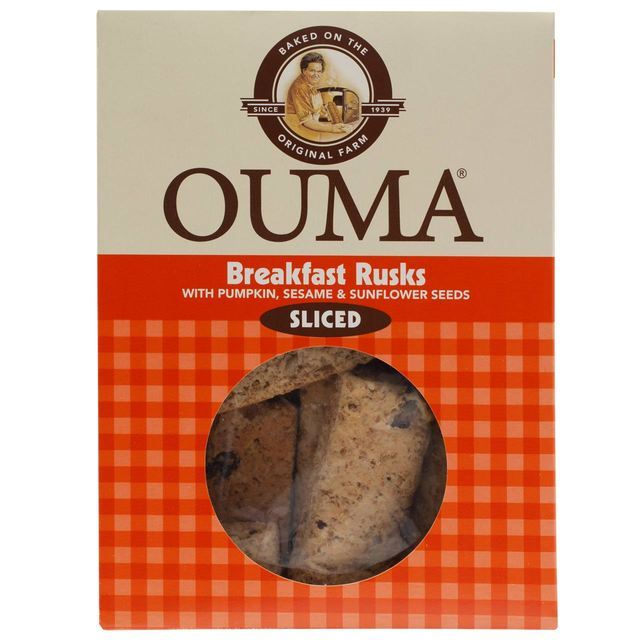
Baked rusks, for those not in the know, are dry, twice baked biscuits and they are big in South African culinary history. Rusks is the anglicised name for beskuit, which comes from the Dutch beschuit – referring to crisp baked breads and biscuits. The rusks form a traditional Afrikaner breakfast meal. They were, also, widely used as a way to preserve bread in pre-refrigeration times. Today, with the popularity of baked muesli bars I see a renaissance for this tasty snack. The return and rise of the rusks: A South African story to tell the world.

Rusks Are Making Their Presence Felt Globally

Soldiers have relied on rusks to feed them on the battlefield, as they can be stored on their person and don’t go off in a hurry. Hard tack biscuits have fed sailors and soldiers for centuries throughout Europe and into the New World. In the 21C, rusks have an opportunity to make their presence felt on supermarket shelves across the globe. The return and rise of the rusks: A South African story of culinary success awaits. Ouma Rusks come in a range of flavours including: Buttermilk; Muesli, Three Seeds; Poppy Seed and Blueberry; Raisin and Apple; and Condensed Milk.

You Can Purchase Rusks Online in Sydney

You can purchase rusks at your quality South African grocery store and online in Sydney. If you have not tried this typical South African treat, do yourself a favour and indulge in this delicious snack. Top quality rusks from South Africa are full of flavour and packed with a rich culinary history. Nothing reminds one of home as quickly and intensely as food from the old country. Expats usually keep a packet of rusks handy in case of emergencies. If home sickness and sentiment threaten to overwhelm them, they break open a packet to assuage these feelings.
​
South Africans love their rusks, especially in the morning with a nice cup of tea or coffee. As they say, sometimes the simple things in life are the best and this is particularly true in the kitchen. The perfect rusks are as right as rain and just as sweet. This is a healthy treat for breakfast or a snack as well, with little fat and just the right amount of carbohydrate for the busy day ahead. The return and rise of the rusks: A South African story to be proud of.

The Best Chakalaka in Sydney

1/6/2020

 
Picture

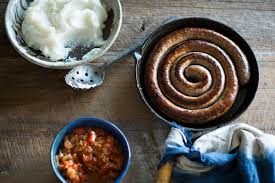
In many ways, the whole Chakalaka story is a perfect illustration of the multicultural nature of South Africa. A bunch of Mozambican mineworkers in Johannesburg, coming off shift, whip up a spicy relish to accompany their maize pap. Feed the man chakalaka and pap! This dish is most often made from tinned tomatoes, beans, onion, garlic, chilli and curry powder. Its spicy quality represents a Portuguese influence and tells another strand of the migratory story of the genesis of South Africa. The Rainbow nation has so many unique fusion flavours created from the admixture of peoples from all over. The best chakalaka in Sydney sometimes comes out of a can, transporting the soul of South Africa to expats around the world.

South African Chakalaka is a Vegetable Relish

South African chakalaka is a vegetable relish with a thousand different faces, according to the creator and the many variations on a theme possible for this yummy soupy sauce. Some folks add carrot, capsicum, and you can use baked beans or another type of legume bean. The chakalaka is great with a braai, as a spicy pickle to accompany the meat. Traditionally served with maize pap, which is a stiff porridge made from ground maize meal. The best chakalaka in Sydney can be found in the homes of expat South Africans and in a good South African speciality grocery store.

Chakalaka Captures the Hearts of Many
​

Chakalaka in a tin comes in extra hot, hot, and mild and spicy. You can also buy a bag of chakalaka spice mix premade. Chakalaka is, also, used as a spicy flavouring for cured and dried meats like Biltong and Wors. In Soweto, some call it a salad and chakalaka is one of those simple but true dishes born out of necessity and poverty. It is, however, often the simple things in life which capture the hearts of many and brandish staying power to boot.
​
The best chakalaka in Sydney is available online; and this innocuous looking little tin can transform a meal into a tangy feast. It may not quite be the fishes and the loaves, but it does go very well with bread. Get a taste of the townships of South Africa and spice up your next repast. It goes down exceedingly well with lager on a warm day. It can, also, be matched with a zesty zinfandel or a Portuguese rose. Chakalaka it sounds like a dance move and tastes like a hot dream.

Defining South African Culture

16/5/2020

 
For all of us home is defined by a number of things. Our home culture may be characterised by multiple general and specific qualities. Defining South African culture on this basis may well be different for each of us. However, there will be things that we share, and which bring us together. Our heritages and ethnic/racial backgrounds may be different, but we still call South Africa home. There are many diverse and distinct languages and cultures within our southern homeland; and some are calling us the Rainbow nation in response to this fact. Perhaps, we all have a greater hope for the future than some others do?

They Call Us the Rainbow Nation

Defining South African culture is more about inclusion than exclusion in 2020. We want to gather all of us together in a defining embrace. We want to make right the wrongs perpetuated by forty years of apartheid and discover a brighter future for all. South Africa is made up of Khoi, San, Xhosa, Zulu, Pedi, Dinka, Himba. Berber, Tswana, Ndebele, Boer, Anglo, Indian, Arab and many more peoples who all create a dynamic rainbow of colours and cultures. The warmth and wide smiles are shared by South Africans across this exotic land. On a good day we all share an energy and resourcefulness rarely found in other climes.

A Land of Startling Beauty & Cultural Diversity

The land where modern human beings first emerged is one of startling beauty and dramatic skylines. Flora and fauna abound in blazes of colour and movement. We are all humbled by the richness of our homeland and share a deep respect for the life around us. There have been challenging times and there will be going forward as well. But we have learned that things are infinitely better when we tackle them together as South Africans. Black and white, gay and straight, rich and poor, man and woman, urban and bush dwellers, we all share a heritage.
​
Embracing the diversity of 21C South Africa is an empowering thing for all Saffers going forward. We can remember the good bits about our upbringings in the distant past and our defining South African culture, but the bigger picture is really about the future. Together we can bring all the strands of the rainbow nation into one irresistible band of colour and energy. We can share the optimism of a young nation going ahead in leaps and bounds. This is what it really means to be South African.
 

A Brief History of South Africa

9/5/2020

 
Picture
Long before there were nations, the territory now known as South Africa was home to some of the first modern hominids. These anatomically modern humans were active within the Makgadikgadi-Okavango palaeo-wetland of southern Africa around 200 000 years ago. Archaeological evidence confirms this, and they were thought to have dispersed there from earlier east African locations. Africa is home to the emergence of human beings on planet Earth and this is evidenced via many studies of the human genome and DNA sourced from ancient bones. Hominin and australopithecine fossils have been discovered in limestone caves at Taung, Sterkfontein, Swartkrans and Kromdraai. A brief history of South Africa really begins here.

The First Peoples of South Africa

The first peoples of South Africa are collectively called the Khoisan, being made up of the Khoi Khoi and the San peoples separately. Sometime around 3000 and, then again, around 2000 years ago these inhabitants were joined by the Bantus, who spread from west Africa into, what is now known as South Africa. This migration of Ntu-speaking people may have displaced the pre-existing hunter-gatherers and pastoralists. The evidence for this is primarily linguistic and there are those who question the over-reliance on the use of language-based timelines in anthropology, especially in this instance.

European Exploration of Africa

Portuguese explorers began the European outreach into coastal Africa in the 13th century, as they sought an alternative to the well-established silk road for trade. The Dutch East India Company (VOC) established their trading post in 1652, at what had become known as Cape Town by this time. Portuguese, Dutch, Danish, French and English ships stopped here regularly en route to the Indies, trading tobacco, copper and iron for fresh produce. Slaves were imported by the VOC from Indonesia and Madagascar to fill labour shortages at the Cape in the 17th century. These people began the first coloured communities of Cape Town.

The British took Cape Town in 1795, when the Dutch had become the Batavian Republic – a vassal state of the French. It was returned to the Dutch in 1803 via a treaty but was captured by British forces once more in 1806 and became the capital of the South African colony in 1814. In 1910, the Union of South Africa was established by the British after unifying the two defeated Boer Republics with the British colony of Natal. The Anglo-Zulu War was fought between the British and the Zulu kingdom in 1879. The two Boer Wars were fought in 1880-1881 and 1899-1902. The Boers successfully employed guerrilla warfare tactics in the first war forcing the British to return with greater numbers in the second war. The British established concentration camps out of refugee camps to break the guerrilla campaigns being waged by the Boers. It has been estimated that some 27 000 women and children died in these camps from infectious diseases like measles. The captured men were transported out of the country overseas. In this, a brief history of South Africa, this is a very low moment for humanitarian ideals and behaviour.

The Union of South Africa achieved independent sovereignty in 1931. In 1934, a political coming together of Afrikaners and English-speaking whites occurred via the merging of the National Party and the South African Party to form the United Party. A spit between the two factions occurred in 1939 over the entry of the Union of South African into WW2 in support of the British. The National Party adherents strongly opposed this. In 1948, the National Party was elected to govern South Africa. They imposed apartheid by strengthening the racial laws already in place under the colonial administration and institutionalising them. The National Party government categorised all people into three distinct classifications: whites, blacks and coloureds. Whites who were less than 20% of the population were the highest status group, followed by coloureds, and lastly Black Africans. Resistance to this politically and morally unfair system was perpetuated by individuals and activist groups across South Africa. Brutal reprisals by the National Party government resulted in thousands of deaths and imprisonments over some 40+ years. Global condemnation of apartheid and South Africa was voiced loudly, especially by the United Nations. International trade embargoes and sanctions were imposed upon South Africa to spur the nation to change its ways. The African National Congress (ANC) was the largest anti-apartheid group and their most prominent figure Nelson Mandela suffered incarceration for 27 years as a political prisoner.

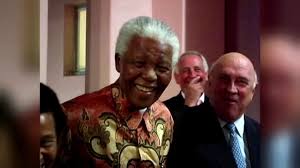
In 1994, Mandela would become the first black African President of South Africa. Apartheid legislation was repealed in 1991, following lengthy negotiations between F.W. De Klerk’s National Party government and the ANC over 6 years. The ANC won the 1994 election by a landslide and has been in power ever since. Mandela’s presidency was celebrated around the world, as a civilising milestone moment for humanity. Of course, South Africa did not immediately become a perfect place to live on earth and it faces many economic and social challenges. It is a nation that experiences a large number of public protests. It is a nation involved in a transition, which may take many decades and involves multiple groups of people with various racial and tribal allegiances. In 2006, South Africa became the first African nation to legalise same-sex marriage. There have been many hundreds of xenophobically inspired attacks on people within its borders. As of 2015, some 1.4 million higher education students have benefited from a financial support scheme started in 1999. Education is the answer, as it is every where in the world. Violence is most often committed by stupid people holding onto simplistic opinions and beliefs. A brief history of South Africa can illustrate this fact.
​
South Africa currently faces the global coronavirus COVID-19 pandemic, and this will test its humanitarian mettle like never before, but its people are resourceful. They have overcome huge obstacles on their journey so far and will continue to triumph in the long run. 

South Africa’s Top Sporting Triumphs

2/5/2020

 
South Africa is a nation that punches above its weight in sporting terms. The population of South Africa is around 59 million, according to 2020 figures provided by Worldometer. Compare this to the USA with some 330 million, China with 1.4 billion, Russia with 146 million, the UK with 66 million, and India with 1.388 billion. Of course, raw numbers of citizens are not everything. The South African GDP in 2019 was around $370 million, which according to GDP per capita places us in 48th spot globally. The USA GDP in 2019 was $21, 427, 100 million, China came in 2nd with $14, 140, 160 million, and the UK GDP in 2019 was $2, 824, 850 million. Thus, if you do the sums South Africa’s top sporting triumphs have been generated via a lot less money to spend on sport, which is something to chew over.

South African Memorable Sporting Achievement of All Time

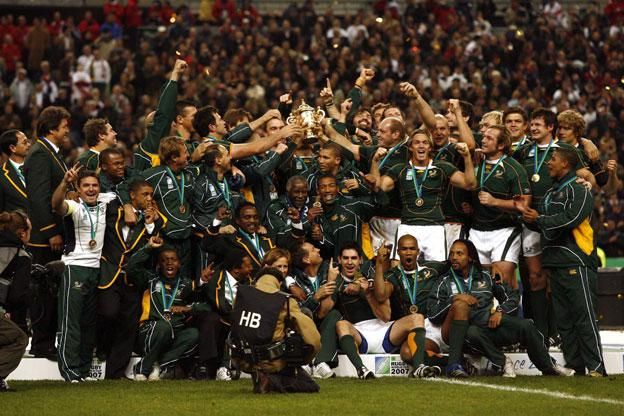
So, let us begin the list of these memorable sporting achievements of all time. Nelson Mandela may not have been the captain of the Springboks or the South African cricket team, but his inspiration has delivered some pretty memorable moments. The 1995 Rugby World Cup saw the Springboks at home and up against the world beating New Zealand All Blacks. Somehow, the new Rainbow Nation overcame the odds to deliver an unforgettable victory. Winning the Web Ellis trophy may not be the biggest international sporting achievement, but it ranks in this writer’s mind as something pretty bloody special. Go Boks.

World Record Beating ODI Victory Over Australia
​

The 1996 South African triumph of the African Cup of Nations was another very special sporting achievement. Hosting the event in a last minute save for a faltering Kenya, Bafana Bafana beat Tunisia in the final. Substitute Mark Williams scored 2 goals in 2 minutes at the FNB Stadium. Cricket must, also, appear prominently in South Africa’s top sporting triumphs. A world record marathon victory over Australia in the greatest one day international match ever played must not go unnoticed. South Africa scored 438 runs in the Fifth ODI to overcome the Aussie’s 434 runs.
 
In 1979 Jody Scheckter won the Formula One Championship with Ferrari. He remains South Africa’s only winner of this coveted event. This very expensive elite motor sport is an Everest like achievement in anybody’s book. Chad le Clos defeated Michael Phelps in the 2012 Olympic 200m butterfly to win gold. To overcome the greatest Olympian ever is no mean feat. These have been just a few of South Africa’s top sporting triumphs.

Picture

Famous Cinematic Scenes from South Africa

25/4/2020

 
Picture

South Africa has been the setting for some very memorable cinematic moments. In accord with this and the current coronavirus COVID-19 lockdown I thought that it would be a good time to review a few of these. Perhaps some of us will stream a movie to remind ourselves of aspects of South African culture and its stunning geography. I remember lining up outside the cinema complex in the 1980s for The Gods Must Be Crazy and its sequel. Suddenly, the Coke bottle became something else entirely in the minds of millions of people globally. The late Jamie Uys wrote and directed this phenomenal success and this film contained some of the most famous cinematic scenes from South Africa. It put the San bushmen on the map for filmgoers everywhere.

A Freeman Playing a Much-Loved President

Invictus placed fan favourite Morgan Freeman in the cinematic shoes of the late South African President, Nelson Mandela, during the 1996 Rugby World Cup. In this full of feeling sports movie, starring Matt Damon as Springbok captain François Pienaar, director Clint Eastwood captures the country in transition. There are many famous cinematic scenes from South Africa in this great film. 

Leonardo DiCaprio Loved Filming in South Africa

Blood Diamond with Leonardo DiCaprio sits at the other end of the emotion spectre. Shot on location in Cape Town and Port Edward this movie highlights human greed, human exploitation and violence. DiCaprio was later recorded saying that he loved filming in South Africa, where he found the people warm and the landscapes stunning.

​Prawns Were Never the Same
 
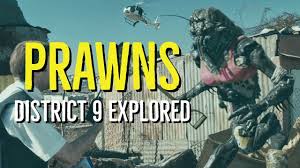
Is there a better film made in South Africa than District 9? This 2009 Neill Blomkamp movie is an allegorical science fiction themed affair. It was filmed in Johannesburg and captures the ghettoes but with aliens inhabiting them. District 9 was a global hit and was nominated for four Academy awards. Laugh out loud funny this movie artfully delivered the reality of the apartheid history of South Africa to audiences of all ages around the world.
 
In my own recent experience, during the 2020 virus crisis, I sometimes feel like I have been transported into one of those zombie films. People around me are wearing face masks and giving me a wide berth whilst we shop for essential items in supermarkets. Vast expanses of empty shelves surround me where once the toilet paper, flour, rice, pasta and hand sanitiser used to be.

In 2002 Mr. Bones starring Leon Schuster became the highest grossing South African film of all time.

In 1987 Quest For Love was the first gay-themed movie released in South Africa.

Tsotsi won the Academy Award for foreign language film in 2006.

These are just some of the many famous cinematic scenes from South Africa.

South Africa: Coronavirus News

17/4/2020

 
Picture

South Africa, as of mid-April 2020, has according to the latest report in Sciencemag.org flattened the curve of the rate of coronavirus infections. South Africa is into its third week of COVID-19 lockdown and this will continue at least until the end of April. The nation is, like many countries around the globe, looking to ease restrictions and resume some degree of functionality. I thought that many of our readers, here at African Vibe would appreciate an update on South Africa: Coronavirus news. The Minister of Health Zweli Mkhize has a team of scientists advising the government about the possible next phase of response to this global pandemic.

COVID-19: How It Began in South Africa

The first coronavirus infection was detected in South Africa on the 5th of March 2020. Following this the epidemic charted an exponential curve, which was quite similar to that of the United Kingdom and the United States of America. Then, on the 15th of March the South African President, Cyril Ramaphosa announced a national state of emergency, which prevented overseas visitors from high-risk countries entering South Africa. Next, on the 27th of March came a 3-week lockdown, which involved closing all borders and confining residents to their homes. Those performing essential services were exempted from these restrictions.

The Lockdown Has Flattened the Curve in South Africa

This lockdown has been extended up until the end of April. The lockdown has dramatically reduced the number of daily infections. Today, the average constant is around 70 new cases per day. There are 2 415 confirmed cases of COVID-19 infection and 27 deaths. Speculation about low levels of testing in poorer communities has been disputed by Salim Abdool Karim a scientist who chairs the South African COVID-19 advisory group. He says that there has been increased testing within these poorer communities. The lockdown has been very effective in flattening the curve in South Africa.
​
Karim does not think that South Africa will, however, avoid a future surge in coronavirus cases. Rather, he considers, that the lockdown has bought the nation some much needed time to prepare. Tens of thousands of community health workers have been sent into villages and townships to screen and test people. They will attempt to control outbreaks within areas and prevent the spread of the virus. Field hospitals are being erected and the nation is expanding its capacity for burials. South Africa: Coronavirus news is better than expected right now, but things could take a not unexpected turn for the worse in the not too distant future. We here at African Vibe wish our very best for all South Africans everywhere. 

Bunnychow in Sydney: Durban Street Food in Balgowlah

10/4/2020

 
Picture
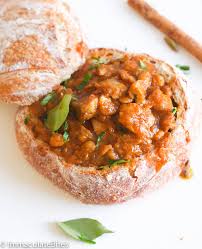
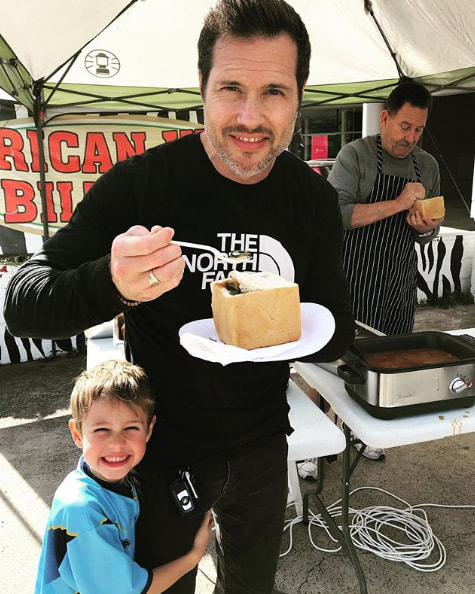
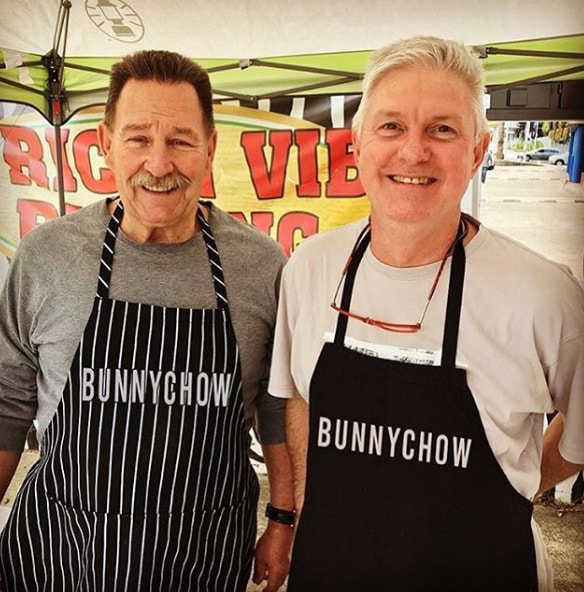
Have you had a Bunny Chow? The South African fast-food sensation, which is taking Sydney by storm. Bite into a ‘bunny’ and you won’t know yourself! A delicious Durban curry inside a loaf of bread. Originating from Gujarati South African based Indians, it has become a global phenomenon.  A bunnychow is slang for mouth-watering Gujarati food. You can get a ‘kota’ – a quarter bunny made from a variety of fillings. So, Mahatma Gandhi is not the only amazing Indian export to come out of South Africa. Bunnychow in Sydney: Durban Street food in Balgowlah is knocking the socks off locals and visitors alike.
Picture
Balgowlah Bunny Chow Bites Back Boring Fast Food

They say that Bunnychow is bursting with more flavour than a messy meal like this has any right to do so. They also say that fusion food like this is the backpacker of fantastic feeds at budget prices. You can find bunnychow in New York, London, Tel Aviv, Sydney and everywhere you find an expat community of South Africans. But Balgowlah bunny chow bites back boring fast food better than the rest. Have you tried a Balgowlah bunny? Perhaps, think about this next time you are out and about in the region.
Picture

This is Integration on a Culinary Scale
​
Some South Africans swear that love is a bunny shared between two. They can tell you stories of good times spent together accompanied by a hunger assuaging bunny. Nights out on the turpentine are best followed by a late-night bunny. Feed the man a bunny and he will do the right thing by you. Bunnychow is a way of life for many. A dietary marker in the lives of most South Africans, is this marriage of Gujrati curry and white bread. This is not assimilation this is integration on a culinary scale. Food always leads the way, when it comes to common sense decisions.

You can keep your bunny vegetarian, as in fact the first bunny chow was. Alternatively, you can tuck into a chicken curry filled bunny and let the delicious sauce run down your cheeks. Bunnies can be filled with a variety of Durban Indian inspired curries containing lamb, beef or goat. The white loaf crust makes the perfect eco friendly container for your curry. Why? Because you can eat it of course. Bunnychow in Sydney: Durban street food in Balgowlah is a must for any 

The Drakensberg Mountains: Inspirational Wonder

3/4/2020

 
Picture
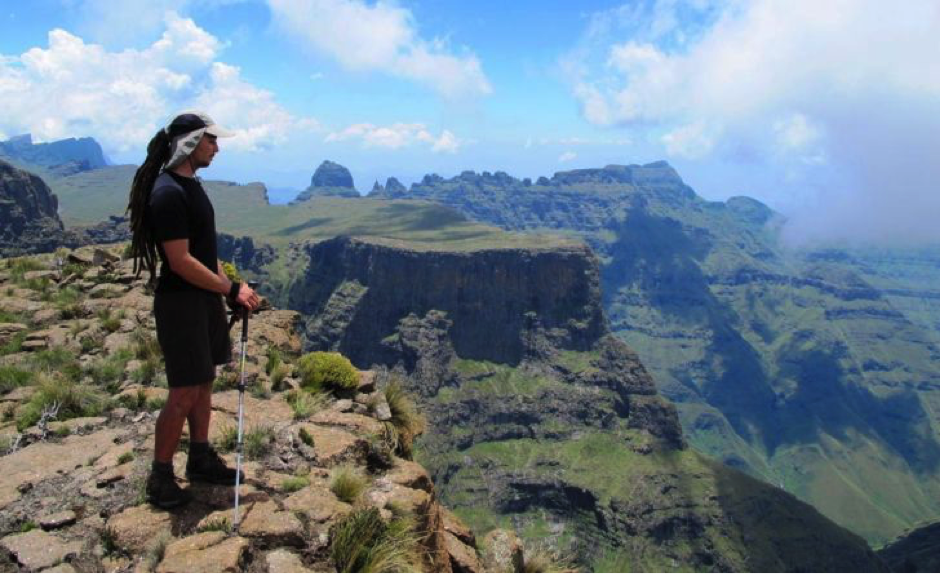
Mountains of Dragons is the meaning of the name given to this 1000km escarpment in South Africa. Does the name of a major geographical feature get anymore evocative than this? The Drakensberg Mountains: Inspirational wonder par excellence. These mountains enclose the central South African plateau and reach more than 3, 840 metres at the highest point. You can see the pointy tops of a massive dragon stretching across the horizon, especially at the right time of the day. This is a dramatic skyline landscape feature and sets the scene for exciting adventures. You might even find a dinosaur fossil if you are lucky.

South Africa & Australia Once Joined Geologically

There is a theory that the reason many South Africans feel so at home in Australia is because the two land masses were once joined as part of the giant land mass Gondwanaland. The west coast of Australia abutted the east coast of the African continent. Of course, this was some 180 million years ago but in geological terms this is fairly recent. The Drakensberg Mountains were formed via a mantle plume around this time and the resulting rift valleys on each side of the bulge became the proto-Indian and proto- Atlantic oceans. I always thought that South Africa was a catalyst for world change.

The High Peaks of the Drakensberg Mountains

The Drakensberg Mountains highest peak is Thabana Ntlenyana, which rises to 3, 482m. Other high points are Mafadi at 3, 450m, Makoaneng 3, 416m, Njesuthi 3, 408m, and Champagne Castle 3, 377m. There are great opportunities for hikers across this magnificent escarpment. You will be suitably impressed with the rugged natural beauty of this landscape. There are steep challenges and milder climbs available for hikers of all ages and fitness levels. The high treeless peaks of the Drakensberg Mountains have been lauded by the World Wide Fund for Nature for their ecological uniqueness.

Do yourself a favour and put the Drakensberg Mountains on your South African adventure bucket list, as must do places to visit. Take in deep breaths of fresh mountain air and feel alive. This is ancient rock emanating dragon myths and tales of wondrous things. There is rare flora and fauna to see. Antelopes and the rare white rhino live on the lower slopes. There are baboons, wildebeest, and chameleons to observe in their natural settings. You can, also, check out cave paintings from the San bushmen. There are some 40, 000 San rock art works, which is the largest collection of its kind in the world. 
<<Previous
Forward>>

    Author

    Robert Hamilton was born in Vereeniging & attended Springs Boys High School in the 1970s. Now a resident of Mona Vale, North of Sydney, his hobbies include golf, biltong-consumption, tennis and cooking South African cuisine.

    Archives

    August 2020
    July 2020
    June 2020
    May 2020
    April 2020
    March 2020
    February 2020
    January 2020

    Categories

    All

    RSS Feed

Home

Store

Contact

Information

​South African Recipes

Service Area

African Vibe © 2024. All rights reserved. All prices in AUD
Payment methods
Payment methods
  • Home
  • Store
    • Biltong
    • Boerewors
    • Drywors
    • Snapsticks
    • Confectionary
    • Rusks, Biscuits, Tarts
    • Drinks, Juices, Cordials, Rooibos
    • SA Delicatessen
    • Miscellaneous
  • Contact
  • Information
    • Biltong vs Beef Jerky
    • Orders, Payment, Delivery
    • Terms and Conditions
  • Recipes
  • Useful links
  • Recent Posts
  • Reviews